
Green Inspiration from the White Carpathians
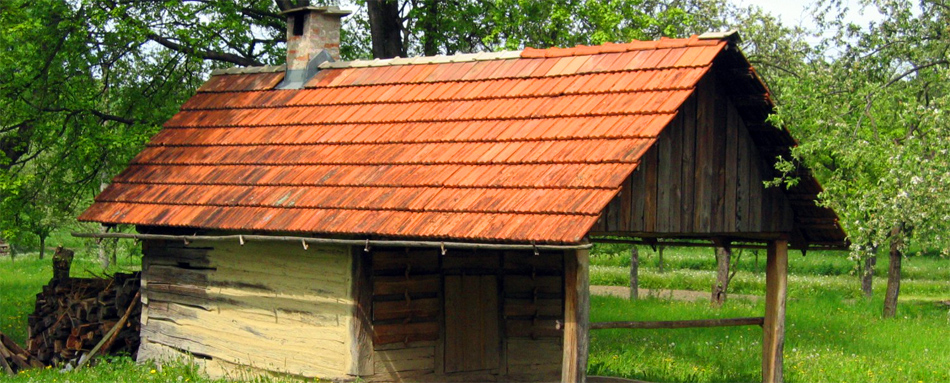
Fruit Drying Kiln
Drying fruit was the most common way to process it in this area in the past. First mentions of fruit drying kilns in eastern Moravia date back to the 17th century; the greatest bloom occurred in the second half of the 19th century. Unfortunately, out of thousands of fruit drying kilns existing in the past just a few persisted up to this day, and are still functional. One of these is a fruit drying kiln in the village of Hostětín, which has probably been standing in the garden behind the juicing plant since the beginning of the 19th century. In this timber house local people dry fruit for their own consumption in an old fashioned way: wood is used for heating and fruit is dried spread over 12 wooden crates that can be loaded with 300 kg fresh fruit at once.
Even modern fruit drying kilns can be heated with wood: the drying air is heated by heating registers or electric heating elements and is forced by fans to circulate.
In order to utilize heat efficiently, it is beneficial to use the heat recuperation which can decrease heat consumption.
Sliced apples and pears, and split plums without stones are dried most often. Dried cherries are very tasty but their preparation is elaborate. The easiest way of drying fruit is at a constant temperature of 50°C, which favourably influences the preservation of taste and smell of dried fruit.
Fruit Drying Kiln in Hostětín
Since 1995, one of the locations of the Traditions of the White Carpathians civic association is in Hostětín, with a focus on protection and use of old regional fruit species and promotion of traditional extensive fruit growing. In autumn 1998 the old wooden fruit drying kiln was restored in the garden of the farmstead belonging to the Veronica Foundation (the last one of former 10 drying kilns in the village). There used to be three thousands fruit drying kilns in the White Carpathians. In one season, 4,5 tons of fruit are dried in the kiln for the citizens of Hostětín and neighbouring villages and towns.
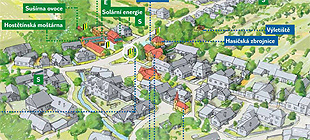 Show a map of all projects »
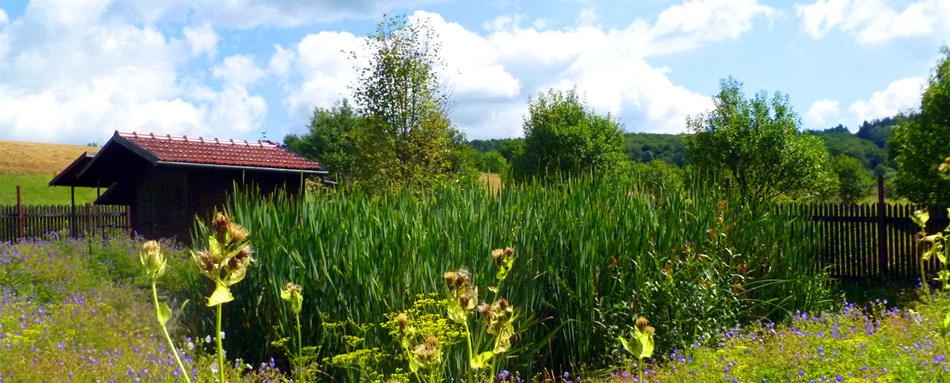
Reed-bed Sewage Treatment Plant
Reed-bed treatment systems (RTBS) are man-made wetlands with planted common wetland species and horizontal subsurface sewage water flow. They function through natural self-purifying processes in the soil environment saturated with water. When sewage water flows through filter medium, impurities are released due to a combined effect of physical, chemical and biological processes.
The self-purification process that takes place in reed-bed treatment systems, is based on the ability of bacteria to degrade organic impurities with their enzymes. This process is used also in vegetated treatment systems where bacteria create macrophyte on roots and a biologically active membrane on filter medium.
Advantages of natural treatment
They include an ecological nature of the facility, possibility of sensitive incorporation in the environment, relatively simple technological and construction design, possibility of sudden high impact, a short-term and long term interruption of the operation, good treatment effects even of diluted sewage water, partial binding of nitrogen and phosphorus as well as heavy metals, possibility to treat sewage water with high proportion of ballast water with low content of organic matter, economic effects consisting in an improvement of soil fertility and increased harvest yield with irrigation. Advantages of reed-bed sewage treatment plants versus traditional sewage treatment plants include low operating costs, simple but regular service, ability to absorb sewage water with considerable fluctuation in composition and amount. On the contrary, a drop in efficiency, often discussed, is not pronounced in winter.
Drawbacks of vegetated treatment
The drawbacks include relatively high requirements of area, a certain dependence of purification effects on climatic conditions, primarily on temperature and solar radiation, necessity of regular qualified attendance which is simple, though, quite a long delay due to a necessity to remove ammonia pollution.
Reed-bed Sewage Treatment Plant in Hostětín
It has been continuously operating since July 1997 as the first sewage treatment plant of this kind in the White Carpathians as well is in eastern Moravia. The construction of this sewage plant allowed to do away with a long-lasting building ban (protection zone of water-supply reservoir Kolelač) and opened possibilities of the village development.
The operation of the sewage plant has been permanently monitored. It has become a local biocentre with educational functions. It was the first sign for the Hostětín citizens and for the whole region signalling that an environment-friendly and autonomous solution of necessary municipal infrastructure may establish a brand new direction in considering the future of the countryside.
Investment and operating costs
A total investment amounting to CZK 4 905, 000 (waste water disposal system and RBTS) was shared by the following institutions:
Uherské Hradiště District Council (CZK 4 500, 000)
Ministry of Environment of the Czech Republic, the program River System Revitalization (CZK 320, 000 for pond construction).
The technology based on natural processes requires regular but undemanding maintenance and low running costs compared to standard technologies.
More from the history
In 1966 the water reservoir of Bojkovice was built by the municipality, bellow Hostětín, on the Kolač stream running through. Hostětín is the only village located in the catchment area of the reservoir, and in compliance with the standards on water resources protection a building blockage had been declared in the village before the reservoir was finished. 1990 the village became independent. The main task of a new local board was to build a sewage treatment plant, and thus remove the building blockage which excluded further development of the village.
In May 1993, in the upper Olšava catchment area, ZO ČSOP Veronica arranged a seminar focused on water purity, intended for local authority staff. Participating specialists, mayors and district officials agreed upon that a reed-bed sewage treatment plant is the best solution for Hostětín. In July 1995 a construction of the reed-bed sewage treatment plant was launched, and in July 1997, the plant was put into permanent operation.
Download
Model Projects of Hostětín
2015 Download »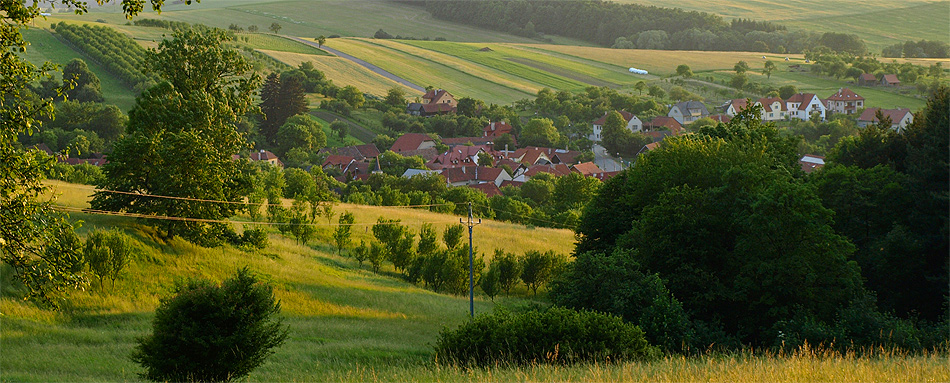
Rural Landscape
Although natural conditions are basic and defining foundations of landscape, long-term human activities significantly put finishing touches to landscapes, and the impact of any human activity on the landscape is diverse. A considerate, sensitive and reasonable approach to using natural resources or landscape management eventually results in environmental contributions and economic savings –generations to come should not have to redress the damages that we have left them because of our irresponsible behavior.
Our landscape programme is based on two approaches:
- a land trust, as one of the instruments of non-governmental nature conservation we try to take care of precious pieces of the White-Carpathian landscape and Hostětín surroundings. The land trust takes care of a part of agricultural and forest lands which were purchased by the Veronica Foundation in 1998.
- we promote expert discussions on landscape: we have been regularly organizing the international interdisciplinary conference Rural landscape since 2003 which creates a working framework for the meeting of young experts interested in the topic of the country and landscape. An expert debate, collective production and further education are evenly included in the three-day programme of the conference. The opening day the participants present their contributions to each other is followed by an all-day workshop focused on a landscape topic. The conference is closed by a field trip around the attractions of the White-Carpathian landscape.

Solar collectors
Solar workshop
Do-it-yourself solar collectors for heating water have been installed on ten houses in Hostětín since July 1997, as outcomes of the programme "Sun for the White Carpathians", which included a workshop for installation of simple modular solar systems.
Savings
Annual energy savings amount to approx. 2 000 kWh per one device. In total, 35 systems were installed on public and private buildings in the Landscape Protected Area.
TiNOX technology
TiNOX placed a large solar collector (36 m2) using the most modern technology on the roof of the juicing plant, and with this the village of Hostětín has one of the largest surface areas of solar collector’s per inhabitant in the Czech Republic.
Download
Model Projects of Hostětín
2015 Download »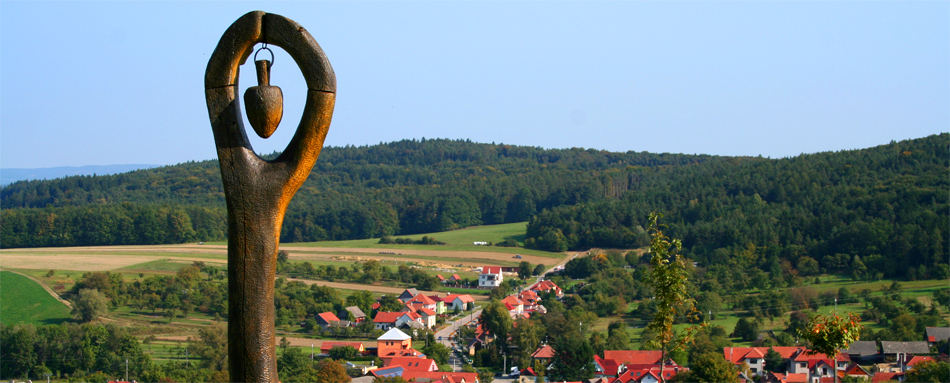
Statues in the landscape
Inspired by wooden sculptures bringing back life to Pivečka´s Forest Park in the neighbouring town of Slavičín, a symposium to create some for themselves was organized in Hostětín.The sculptures and installations from this symposium are placed out on an area of about one hectare. However, the intension were to affect a wider part of the landscape and enrich the surroundings of the villages of Hostětín, Šanov, Pitín and Rokytnice with sculptures. At lookouts, springs, places entangled with local legends, holy or cursed places there are now works located, which highlight the typical face of the White Carpathians, mosaic of the fields, gardens, orchards, meadows and prevailingly broadleaf forests, and remind of the history of the country.
Although, we do not wish to limit ourselves to the installation of sculptures. A local hiking trail with tourist signs interconnecting places with installed works also presents the landscape and local natural and historic attractions. The proximity of the frontier White-Carpathian ridge inspired us to organize the symposium as a meeting of artists from the Czech and Slovak republics. All the participants appreciated the symposium as an opportunity for interchanging experience and enriching relations. It is thus a challenge for the future to organize similar meetings in the Czech and Slovak republic, taking turns hosting them.
Passive house
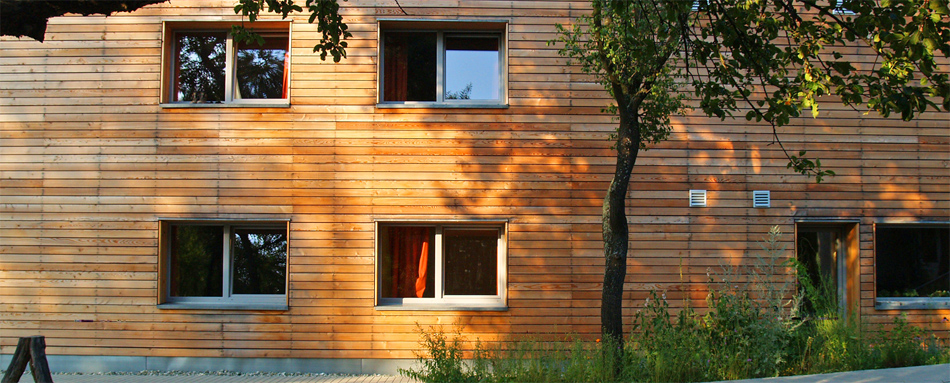
The seminar building of Centre Veronica Hostětín is the first public passive house in the Czech Republic
It uses modern technologies together with traditional materials, saves energy, and utilizes rain water. Most of the interior equipment is environmentally friendly too, and it gained the "Environmentally Friendly Service" ecolabel, certificated by the Czech Ministry of Environment.
The idea started with a derelict fram, bought by Veronica in the autumn of 1998 with a vision of a "Centre for ecological model projects for the countryside", a place for sharing practical knowledge. The passive house was inaugurated in October 2006. The project is an example of a unique cooperation of many partners for preparation, financing and realization of the construction.
Construction concept
Passive house with minimum consumption of energy on heating (max. 15 kWh/m2/year).
Used construction methods and technologies
- insulation from mineral wool and straw bales - thickness up to 40 cm
- foundation thermally separated from the ground by a special polystyrene, 20 cm thick
- windows with heat transmission ≤ 0,8 W/(m2.K)
- very good tightness, attested by a special test during the construction (blow door test)
- ventilation with heat recovery from extract air
- heating of water from solar panels
- additional heating from the municipal biomass heating plant
- utilization of rainwater
- green roof
- utilization of environmentally friendly construction materials (plasters from unburnt clay, unburnt bricks, etc.)
The building offers:
- room for 50 people for training and education in the seminar hall
- room for 100 people in the seminar hall for municipal and community meetings
- 25 beds in 10 rooms with 2-4-beds in each
- an office for employees and interns
- workshops and possibilities for practical courses
Architectural design
Georg W. Reinberg, Vienna
Project engineer
Zlámal and Stolek, Brno
Dissemination and education
The seminar building of the Veronica Centre serves for education and training of the public and other target groups (public administration, entrepreneurs, craftsmen, scholars, and students) on sustainable regional development.
The passive house also plays a role of a model of economically and environmentally sound building. It is accessible to expert and general public, and education, information, and knowledge sharing is being organized in the form of open days, topical seminars, and tours, among other things. In 2007, more than 3500 people took part in our model project tours.
It is also possible to get first-hand experience by spending the night in the accommodation part of the Centre Veronica.
Download
Model Projects of Hostětín
2015 Download »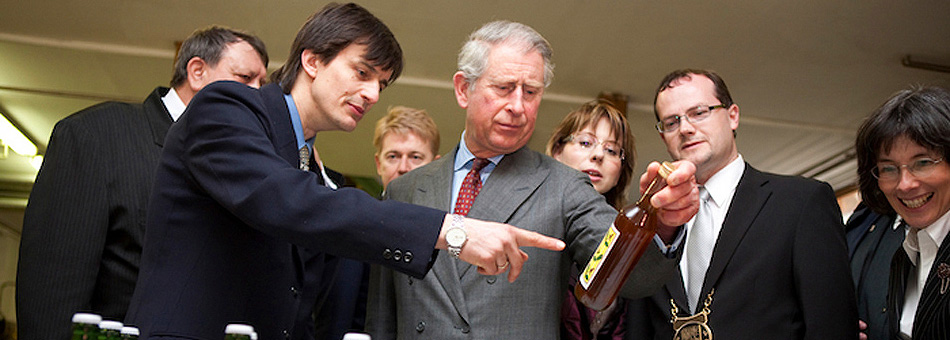
Co u nás
viděl princ
Charles?
Show all projects

Akce a výlety
v kraji jako
z pohádky
The program in detail

Vaše školení
či semináře
v přírodě
More info

Aktivní pobyt
v pasivním
domě
I want to stay at the ECO-inn


About Hostětín
When you visit Centre Veronica and Hostětín, you get the opportunity to experience the beautiful nature of the White Carpathian landscape and see model projects for how to start building a sustainable future. On this site you have 10 reasons to come visit Hostětín, and other information about our Centre, work, and village. Also on how to make a reservation to stay at our ECO-Inn, for the full experience of Hostětín, and the work done here.

Zahradní slavnost
Tato akce již proběhla.
Přírodní zahrada. Zahrada, kde se žije a hospodaří v souladu s přírodou. Místo pro rostliny, živočichy i člověka. Přijďte získat inspiraci, ponaučení i zábavu na naši zahradní slavnosti.
Připravujeme zábavný i vzdělávací program pro děti i dospělé:
- poradenství pro dospělé k přírodním zahradám, ukázka odborné literatury k tématu
- dětská zábavně-naučná stezka
- výtvarné a řemeslné aktivity pro děti
- výroba hmyzích domečků
- cimbálová muzika ZUŠ Bojkovice
- ochutnávka pomazánek z planých rostlin
- bylinkové nápoje
- ukázka typických prvků přírodních zahrad: vyvýšené záhony, bylinková spirála, "sluneční past", prvky pro podporu života v sadu (hadník, ještěrkovník, broukoviště, ježkovník, budka pro netopýra, hmyzí domečky, dům pro čmeláky, ptačí budky), ukázkový ovocný sad starých odrůd ovoce aj.
- exkurze přírodní zahradou
Vstupné 30Kč dospělí, 20Kč děti od 3 let, 80Kč rodinné
Na programu akce spolupracují: ZŠ Záhorovice, ZUŠ Bojkovice, Domov seniorů Nezdenice, Dětský domov Bojkovice, MAS Bojkovsko.
Změna programu vyhrazena.
Zaujala vás tato akce?
Podělte se o ni s vašimi přáteli!

Přírodní zahrady - praktický seminář
Tato akce již proběhla.
Přednášky a praktické ukázky:
- Principy přírodních zahrad a permakultury
- Voda v přírodní zahradě
- Živočichové na zahradě
- Biodiverzitní prvky - význam, výroba a umístnění v zahradě
- Prevence chorob a škůdců
- Využití takzvaných plevelů v kuchyni
- Bylinkové výluhy
- Praktické ukázky mulčování, kompostování, výroba jích
- Příprava a osázení sluneční pasti
- Osázení zelené střechy
Doprovodný program:
- Exkurze po modelových projektech udržitelného rozvoje v Hostětíně
- Doprovodné přednášky a diskuse dle zájmu účastníků
- Otevřený prostor pro vzájemnou výměnu znalostí a zkušeností
- Určování planých rostlin
Lektoři semináře:
Ing. Helena Vlašínová,PhD., RNDr. Mojmír Vlašín, Mgr. Karla Vincenecová
Cena:
1 000 Kč
Cena zahrnuje lektorné na dvoudenním semináři. Nezahrnuje ubytování a stravu.
Ubytování a strava:
Lze zajistit přímo v místě konání semínáře v budově Centra Veronica Hostětín. Vaříme převážně z bio-potravin, z fair trade produktů a místních surovin z našeho regionu. Ubytování v 2-4 lůžkových pokojích s vlastním sociálním zařízením.Cena ubytování a stravovaní dle ceníku Centra Veronica.
Místo konání:
Centrum Veronica, Hostětín 86 ( Jak se k nám dostanete? )
Přihlášky přijímáme do naplnění kapacity, nejpozději však do 17. června 2014. Přihlášku je nutno stvrdit zaplacením kurzovného do 3 dnů od odeslání závazné přihlášky.
V případě problémů s registračním formulářem nebo platbou předem na účet, kontaktujte prosím organizátora akce.
Zaujala vás tato akce?
Podělte se o ni s vašimi přáteli!
Zvolte si sami témata seminářů pro příští rok
Pomozte nám sestavit plán vzdělávacích akcí pro příští rok - vyplňte náš dotazník na http://bit.ly/1i8ioOB
Rádi bychom vám nabídli řadu seminářů a workshopů, které tématicky souvisí s adaptací na klimatickou změnu a zmírňování jejích dopadů. Budeme velmi rádi, pokud nám pomůžete sestavit jejich obsah. Vyjádřete se prosím u jednotlivých oblastí, zda byste o toto téma semináře stáli a dejte i svůj vlastní návrh.
Řekněte si sami, co se u nás chcete dozvědět a kterého lektora máme pozvat. Máte slovo.
Vyplnění vám zabere max. 5 minut. Pokud v závěru uvedete svoji adresu, budete zařazeni do soutěže o naše publikace. Termín pro vyplňování: do 18. března.
Pages


© ZO ČSOP Veronica, hostetin@veronica.cz, +420 572 641 855