
Green Inspiration from the White Carpathians

Za hadem hospodáříčkem
Tato akce již proběhla.
Co vás čeká?
-
Dozvíte se různé zajímavosti o plazech žijících na území Bílých Karpat a o biotopech, ve kterých se vyskytuje užovka obojková, užovka stromová, slepýš křehký a ještěrka obecná.
- Zoologická vycházka s RNDr. Mojmírem Vlašínem
Odkud a kdy vyrazíme?
Vlakové nádraží Vlárský průsmyk 27. dubna 2014 10:00 h
Cena:
dospělý 100 Kč | děti od 6 let 50 Kč
Na vycházku je nutné se předem přihlásit. Přihlášky přijímáme do naplnění kapacity, nejpozději však do 22. dubna 2014.
Zaujala vás tato akce?
Podělte se o ni s vašimi přáteli!

Krajem žítkovských bohyní
Tato akce již proběhla.
Vycházka krajem žítkovských bohyní, o kterém se sice hodně mluví, ale většina lidí o něm četla jen v románu. Zažijte svérázné Moravské Kopanice na vlastní kůži.
Co vás čeká?
- Vycházka v doprovodu žítkovské obyvatelky s výkladem o místní krajině a přírodě, každodenním životě na Moravských Kopanicích v historii i současnosti, legendách a literatuře.
- Návštěva rodinné ovčí farmy na Žítkové s ochutnávkou domácího ovčího sýra.
Odkud a kdy vyrazíme?
sraz u obecního úřad na návsi obce Žítková 25. dubna 2014 10:00 h
Cena:
dospělý 150 Kč | děti od 6 let 50 Kč
Na vycházku je nutné se předem přihlásit. Přihlášky přijímáme do naplnění kapacity, nejpozději však do 22. dubna 2014.
Zaujala vás tato akce?
Podělte se o ni s vašimi přáteli!

Fairtradová snídaně
Tato akce již proběhla.
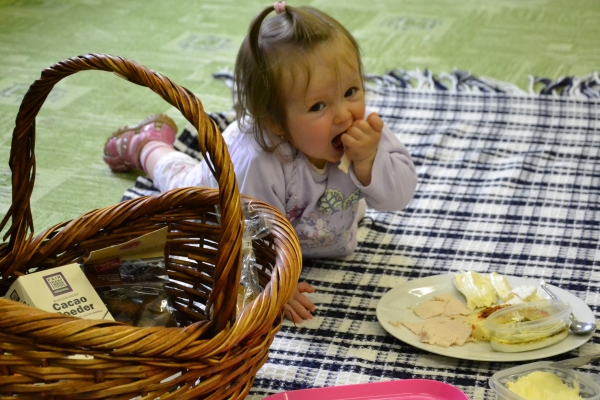
Společná snídaně v přírodní zahradě Centra Veronica na netradiční oslavu Světového dne pro fair trade (www.ferovasnidane.cz)
Tato happeningová akce probíhá na mnoha místech v republice. Účastníci si na akci přináší vlastní dobroty, ať již fairtradové (např. buchty z fairtradových surovin) nebo lokální (sýry, med, zelenina, domácí chléb aj.), určené pro společný stůl. Fairtradová káva a čaj budou zajištěny. Vítány jsou i vaše recepty ke sdílení kulinářských zkušeností.
PS: Nevíte, co je to "fairtrade"? Nevadí! Tím spíše s námi přijďte posnídat.
Bližší podrobnosti:
- Akce je vhodná i pro děti, přibalte jim do baťůžku i gumáčky do potoka, aby si mohli hrát a volně pobíhat. S sebou si můžete vzít piknikovou deku.
- Budeme rádi, pokud se na akci přihlásíte, abychom mohli počítat s potřebnou kapacitou.
- V případě nepříznivého počasí prosím volejte organizátora - Hana Machů, 739569264. Akce by byla s nejvyšší pravděpodobností zrušena.
Zaujala vás tato akce?
Podělte se o ni s vašimi přáteli!
Dovolená s příběhem 25. - 29. 8. 2013
Pro účastníky zážitkové dovolené v Hostětíně 2013 byl připravený bohatý program:
- Vycházka s výkladem po Moravských Kopanicích v doprovodu žítkovské obyvatelky. Povídání o krajině, přírodě a společnosti Moravských Kopanic v historii a současnosti, legendách, literatuře a skutečném životě. Samozřejmě nesmělo chybět ani vyprávění o působení vyhlášených Žítkovských bohyní.
- Zoologická vycházka za plazy Bílých Karpat s RNDr. Mojmírem Vlašínem do okolí Vlárského průsmyku.
- Bylinkový workshop, výrobu bylinkového vína, poznávání bylinek, vaření z plevelů
- Řemeslný workshop - tvoření z ovčí vlny
- Exkurze po hostětínských ekologických projektech (celá vesnice funguje s využitím ekologické infrastruktury – výtopna na biomasu, kořenová čistírna odpadních vod, šetrné veřejné osvětlení, biomoštárna, řada solárních kolektorů a fotovoltaické elektrárny, pasivní dům).
- Výlety s příběhem do okolí
Kurz zdravého vaření 14. - 16. 3. 2014
Při kurzu zdravého vaření si účastníci vyzoušeli přípravu pestré škály pokrmů od veganských, přes vitariánské až po makrobiotické. Součástí programu byla i přednáška Jaroslava Zrníka o makrobiotickém stravování a večerní workshop "Sto lidí, sto chutí". V roli lektorů se představili: Barbora Němečková, Hana Chytilová a Barbora Miturová.

Telefon: +420 572 641 855, +420 608 426 029
E-mail: hostetin@veronica.cz
Korespondeční adresa
ZO ČSOP Veronica
Centrum Veronica
č. p. 86 | CZ 687 71 Hostětín
Czech republic
hostetin@veronica.cz | hostetin.veronica.cz
Sídlo, fakturační adresa
ZO ČSOP Veronica
Ekologický institut Veronica
Panská 9 | CZ 602 00 Brno
Czech republic
www.veronica.cz
IČ 13693620DIČ CZ 13693620
Bankovní údaje
Číslo účtu: 2001190570/2010
Jméno banky : Fio banka, a.s.
Adresa banky : V Celnici 10, Praha 1, 117 21
IBAN: CZ0720100000002001190570
SWIFT (BIC) : FIOBCZPPXXX
Jméno účtu: ZO ČSOP Veronica
Employees of Centre Veronica Hostětín
We invite you to experience first-hand the life of our unique eco-village, nature garden and passive house.
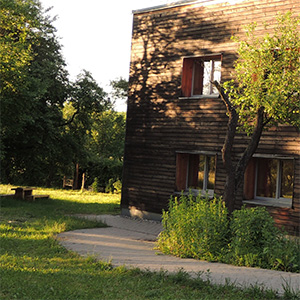

The task of the Centre Veronica Hostětín is to demonstrate that the attitude towards nature, considerate management of resources, and informed interpretation of local heritage may economically stabilize the countryside and solve unemployment even in rather remote areas. It should serve as a living laboratory of sustainable development attitudes and measurements.
We inform, explore, and promote
Educational modules of the Centre are developed mainly in the following expert areas:
- Sustainable regional development
- Climate protection, energy savings, and renewable energy resources; ecological building
- Nature and landscape protection
- Water in the landscape
- Extensive fruit growing
They are not only limited to theory but mainly focused on practical transfer of experience, based on long-lasting monitoring of realized model projects:
- Passive House
- Biomass Heating Plant
- Solar Collectors
- Apple Juice Plant
- Fruit Drying Kiln
- Reed-Bed Sewage Treatment Plant
- Rural Landscape
- Energy Saving Public Lighting
- Sculptures in the Landscape
Research and education are built upon cooperation with a range of experts, schools and institutions. Many allied organizations in the White Carpathians complement the offer of ecological projects with other practical examples and regional specifics. The cooperation with promoters of similar projects abroad is equally important - it expands local experience by international knowledge and latest trends.
Centre Veronica Hostětín offers
- Expert seminars, conferences, and workshops for representatives of public administration, expert public, NGOs, and business sphere
- Guided tours of the model projects
- Programmes and trips for all types of schools
- Lectures and counselling service for the general public
- Library and study room with projects documentation
- Facilities for seminars, team-buildings, and other training activities in the beautiful and clean environment of the White Carpathians
- Stay in the ecological building that provides:
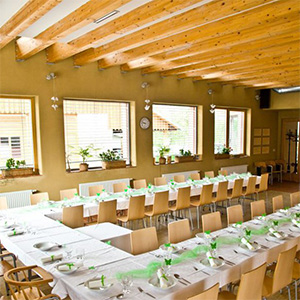
- 50 seats for trainings and lectures
- Room for 100 people for municipal and social meetings
- 28 beds for accommodation in 11 bed rooms, with 2-4 beds in each
- workroom for employees and trainees
- workshop and base for practical classes
- kitchen preferentially using local and organic products
Centrum Veronica Hostětín is a part of ZO ČSOP Veronica (Basic Organization of the Czech Union for Nature Conservation), a civic association based in Brno, which has been operating in Hostětín and the Zlín region for more than 15 years.

Energy Saving Public Lighting
Model public lighting in Hostětín
The street lighting fixtures were replaced and added to in Hostětín in the spring of 2006 with the goal to improve the quality of the lighting and to save energy. The reconstruction is used for the monitoring of real effects and savings in local conditions and for the education of public administration, commercial subjects and other target groups on the topic of high-quality lighting.
Until the spring of 2006, the street lighting in Hostětín had not served its purpose well. It had not been sufficiently illuminating the necessary surfaces (streets and village square) but had been lighting gardens, windows, people´s eyes, surrounding hillsides and into the air far from the village all the more. The uniformity of illumination of the streets had not been good, some places had been getting more light than necessary, other places too little. A part of the light had a quite unsuitable colour, particularly the open mercury discharge lamps lighting in all directions.
Hostětín had invested into other projects in the past and ran out of financial means needed for the reconstruction of the public lighting. Fortunately, Philips Lighting company came with a generous offer in 2005 and donated a set of top lighting fixtures and the most modern discharge lamps to the village. Ing. Jakub Wittlich, a Philips expert, elaborated a project of a new lighting. Local electrician, Karel Slámečka, installed the new lighting in the spring of 2006.
Technical solution
For the project of the new lighting the village was divided into three zones by frequency of pedestrians and speed of cars driving through:
1. Main streets with the highest frequency of people and the highest speed of cars – where the most light is needed.
2. Streets where some residents drive through occasionally - medium degree of lighting.
3. Streets used by pedestrians only - very few lights are needed.
Degrees of illumination IV, V and VI according to Czech standards were chosen for those zones.
The existing 32 light fixtures were replaced for modern, more economical and light-directing types. In order to improve the uniformity ratio of illumination, another 8 lights were added along the main street, one of them on a newly installed pole.
The light fixtures mostly contain „standard" sodium discharge lamps of power input 50 W (Master SON-T PIA Plus), which emit yellow light.
The exceptionality of the installation consists in the fact that the light fixtures were installed strictly horizontally with the use of a level.
For the village square, Philips lighting company chose extremely efficient discharge lamps 60 W CosmoPolis with electronic ballast, only available on the market since 2005. To be specific, the version of the discharge lamps was CosmoWhite so that the light was whiter and with a high-quality colour rendering. The efficiency of these sources including the ballast is over one hundred lumens per watt. Furthermore, the sources have an extremely low content of mercury - only one milligram in each discharge lamp.
Comparison of old and new look of the village
The old lighting was very non-uniform. Two lamps of four in the picture were out of order. The closest functioning lamp was old, with open mercury discharge lamp weakly illuminating the ground but all the more lighting into the eyes. Much more distant light was emitted by sodium discharge lamp and, as you may judge by the picture, it was glaring.
The street illumination after the reconstruction is more intense, more uniform and with lower power consumption. The light sources are considerably less striking with growing distance and much less glaring.
Financing
The total reconstruction investment comprises of two parts. The first one is the value of the donation from Philips Lighting company amounting to 134 thousand CZK. Further expenses were spent by the municipality on the disassembly and assembly of light fixtures and on the purchase of necessary connection accessories, and amounted to 107 000 CZK.
It is obvious that the reconstruction could have been cheaper with basic procurement. The price of such environmentally unfriendly reconstruction could have been lower than one third or one half, however, the final effect would have been significantly worse. There would have been less light in the streets than recommended by the standard and the light would have been directed to surrounding hillsides, into the windows and into the sky and thus the reconstruction would not have met the objective of eliminating the light emissions in undue directions.
Results of the Hostětín reconstruction
Harmful consequences of the public lighting were radically cut down, whilst the illumination intensity of roads and pavements increased twice or more - up to the degree recommended by the Czech standard for illumination degrees IV, V and VI. Also, light towards the surrounding hillsides and in distant air decreased ten times. At the same time, power consumption decreased by more than one third - from power input 4,6 kW of the whole lighting system to 2,9 kW. The consumption in the last years were 17 thousand kWh per year, now the municipality expects that the annual bill will be only 11 thousand kWh.
The impacts of the individual measures will be further monitored and evaluated so that the know-how might be passed on to other municipalities who face the task of reconstruction or investment in public lighting.
Download
Model Projects of Hostětín
2015 Download »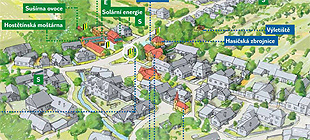 Show a map of all projects »
Biomass Heating Plant
Technical parameters
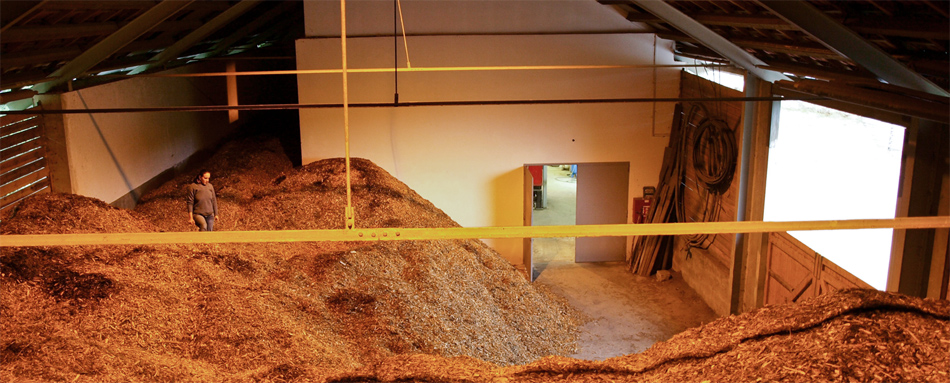
Since 2000, Hostětín disposes a central heating plant (732 kW) using renewable resources of energy. It is fuelled by wood chips of waste wood from nearby sawmills (500-600 t/year), and is connected to 69 of 81 homes in Hostětín by means of a 2,4 km long distribution line.
Effects of the model project
The heating plant produces about 3 500 GJ of heat in one heating season and saves 1 500 tons of CO2 per year. This means that fuel payments do not go to international gas companies, electric or coal-fired power stations, but to the municipality and local entrepreneurs. Also, the air in Hostětín is much cleaner than before.
Financing
This unique investment was financed by the State Environmental Fund of the Czech Republic, a Dutch grant within one of the international mechanisms reducing CO2 emissions in accordance with the Kyoto protocol - joint implementation, the Czech Energy Agency, the municipality, and the residents connected to the heating plant.
The investment in the heating plant has been complemented by thermal insulation of the houses which the citizens perform gradually at their own expense (9 houses were thermally insulated in Hostětín by the year 2006).
Download
Model Projects of Hostětín
2015 Download »Pages


© ZO ČSOP Veronica, hostetin@veronica.cz, +420 572 641 855